
I have worked with multiple different autism populations as an OT and I have a kid who is officially labeled as autistic that I have homeschooled to graduation. I just feel I need to put my credentials on the table before I start today’s topic. Today, I want to dive into what the latest autism research is saying, and what I think that means for treatments and therapies. In the last two years, there have been a number of scientific studies done to look for “what causes autism?” Some of them may have found real answers and they are not pointing towards any medications or environmental factors.
The Origin of the Species
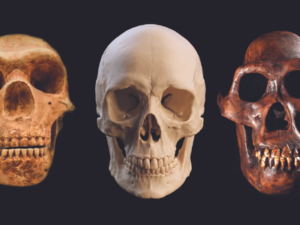 Are you aware of the Neanderthal story? Basically, Neanderthals were a type of prehistoric human that co-existed with Homo sapiens. Modern humans are labeled Homo sapien sapiens, meaning “the wise human.” But our ancestors did a little more than borrow a cup of sugar from the Neanderthals. While there are no Neanderthals left on earth, it appears their genes are still very much present. If you do a 23 And Me kit, it will even tell you how many of those Neanderthal genes you have compared to the rest of the people they have tested.
Research appears to have found a connection between autism traits and Neanderthal genes. Neanderthals apparently were not as social as homo sapiens. They preferred to live in small family groups instead of larger tribes. They had a tendency to collect things in case they needed them later. They also had larger heads than homo sapiens. Is this sounding like anyone you know, or is it just me?
Where am I going with this? Researchers have now found a whole set of genes that appear in both kids with autism and are Neanderthal genes. They believe these genes cause many autism traits. This supports the theory that some versions of autism are a normal variant of human differences.
More Genetics
Even before the Neanderthal study, scientists were looking for genes that cause or are linked to autism. Since 2010, they have done many studies and have found over 100 genes with a link to autism. Does that mean every autistic person has those 100 genes? No. There is a combination that results in a set of traits, and the most important part is how they affect the brain.
 From what I have read, scientists are certain that there is a genetic cause for autism, but it is not as simple as a specific gene. There are genes that appear to be linked to specific traits like developmental delays, communication struggles and more. However, this goes beyond how those genetics play together in brain development. Some scientists hope they will discover a missing piece, such as a vitamin or mineral, that is at play in the body that is playing a role in that interaction. The truth is that the have not found that link, but it is interesting they are looking for it.
The Brain
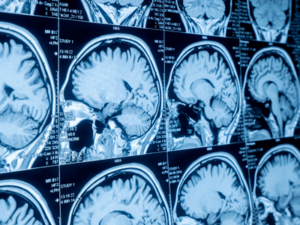
The very newest piece of research I have read on autism is focused on looking at MRIs of the brains of those with autism to see if they can find an actual difference. What the newest research indicates, is that there are at least 4 different neurological patterns in those we are calling autistic. One is hyper connectivity, as in the brain has more connections than a typical brain. A second type, is hypo connectivity. This means the brain has fewer connections than usual. They also found brains that have a combination of the two, and interestingly, a version where children start as one version and change to the other.
Personally, I hope this piece of autism research continues to the point where we stop saying it is just a “spectrum” and start using more accurate labels. For many years, I have believed we are putting too many people in the autism tent and as a result, not meeting everyone’s needs. If you have a hyper connected brain, your needs are going to be different than a hypo connected brain. You need different resources, therapy and possibly other differences we don’t know yet. Is there any chance there is a medical reason that children switch between the two types? Does illness, allergies or drug reactions play a role in kids than switch? Do we have to call it all autism? There is still so much here to learn and I am excited to see where this research leads.
Conclusions
 Much of this research points to a lot of possibilities that autism can be truthfully described in a lot of ways. This is a situation where it can literally be both at more times than supposed.
Based on the Neanderthal genes, we can agree with those who say that the autism profile has been around for thousands of years. The genes and traits of autism are not new and existed in the population well before it ever got a label. Those who suggest that autism is not always a problem to be solved but a difference to work with, have good standing with this development. There are many stories from folklore all around the world that sound like autistic kids. For example, the changeling stories from the Celts are probably stories of autism before it was understood.
The combination of finding so many genes at play, as well as several different brain patterns, supports the statement that “if you have met one autistic person, you have met one autistic person.” The tent of who gets labeled autistic is usually based on check lists and not on genetics or MRIs. The realization that these things point to the fact there may be several different human variances that we are calling autism is interesting. I do hope we figure out whether some of those things should be labeled or treated differently.
The fact that some children appear to change from one type of brain difference to another during childhood supports the stories of parents who say their child went through a specific change during childhood. If a child had a hyper connected brain and something caused the brain to stop and change to a hypo connected brain, that is probably obvious to parents. The child that was meeting milestones and now is not, may very well be following that brain pattern. For me, those kids who change patterns deserve study. We need to know what causes a brain to switch patterns. We need to know if we can prevent that change if it is resulting in a bigger disability. And if some kids switch from hypo to hyper connected, what is the long term result of that? We need to know why that happens, too.
None of the articles I read for this post talked about function. None talked about those with autism as people who need health care or answers or help. They were just test subjects. I strongly hope that psychologists, occupational therapists, speech therapists and others become involved in research to look for which treatments work best for whom and how we accomplish that.




0 Comments