
Lately, I keep seeing people talking about how their 4 or 5 year old can or can’t read. Unfortunately, our schools now expect kids this young to read, but is that developmentally appropriate? No. Let’s talk today about what is actually normal and what isn’t. Let’s get into what you should expect from your homeschooled child and yourself as you teach reading.
I feel a need to add, that not all children are ready to follow this list at these exact ages. If you want to delay teaching letters until first grade, that is fine. If your child is precocious and does things early, that is not the same as pushing a child who isn’t ready. Every child should learn to read at their own pace, but the goal here is to talk about what is reasonable based on child development.
Preschool

Preschool kids should learn shapes, colors, animals and basic drawing skills before we worry about reading. It is normal for kids this age to enjoy being read to and to point out pictures in a book. They may recognize their name and other words or signs they see frequently. For example, your child knows the stop sign says stop, because the clues of the shape and color of the sign help them after you have told them several times what the sign says.
This age child is not ready for actual reading, because the eye and brain development are not there. Those underlying skills are still developing.
Kindergarten, Age 5
This is the age when it is normal for kids to start learning letters, shape and sound. This is not something they learn over night, this can take months. It is an abstract concept to understand that A says “ah” much less do more with it. Their hands are usually not really ready for good handwriting, so learning to make the capital letters first is best, because they are easier. Kids are often still struggling with pencil grip and hand strength, as well as eye control. I believe it is better to spend time developing a good pencil grip and fine motor control before you start writing, than try to correct the problems of bad writing habits later.
If the child’s brain and body are not ready both reading and writing are very difficult skills to master at this age. Memorizing small words like “go” or “we” are possible at this age for some children. They start reading small sentences like “We go.”
By the end of Kindergarten, typical kids can recognize most letters and know their sounds, if they have had proper instruction. This sets them up to start reading in first grade. Schools today may be pushing kids to read 200 words and write paragraphs in kindergarten, but it simply is not developmentally appropriate, or necessary for their future.
First Grade, Age 6
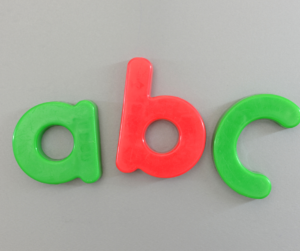
At six, a typical child can memorize all the letter sounds and can start to truly sound out new words. It is normal to start with simple words like cat and dog. Kids learn to read very easy sentences like “The cat sat on the mat.” They not only can read that sentence, but understand what is happening in the story. At the start of the school year, they may still need pictures to help them understand the story. However, by the end of the year, they should be able to understand simple sentences without picture hints.
By the end of first grade, kids should be able to sound out simple words with sounds like sh, ch, and th. They can read words like fish, chips and this. This goes with many level 1 programs of Orton-Gillingham reading programs.
As kids are learning to read, teaching handwriting for lower case letters is important. One thing I think school today lack, is enough time spent just learning to make the letters the right way. Rather than jumping ahead to copy or spell words your child is still learning to read, spending time on handwriting now, is time well spent. There is nothing wrong with working on one lower case letter at a time and building skills slowly.
Second Grade, Age 7
At age 7, kids are ready to start reading words with more complexity. This is when they learn rules like “if two vowels go walking, the first one does the talking.” That rule applies to words like boat, goat, and float. They learn to combine words they have seen into compound words like butterfly, wallpaper, and raincoat. They are decoding longer words but ones with vowel rules they understand.
Generally, kids are learning to spell and write one word at a time from memory at this age. They can copy sentences and should remember how to form their letters consistently.
Many kids this age, don’t really enjoy reading. They can do the still, but still want pictures in their books to help them understand the story. They may be able to imagine a simple story, but have trouble picturing things from written words that they have never seen. For example, there is no way they can read enough words to picture a wigwam if they have never seen a picture of one.
Third and Fourth Grades, Ages 8-9

Most kids this age will be learning to decode more complex words with tricky sounds like thought and motion. These are times that phonics becomes more challenging because groups of letters make sounds we memorize, but they do not go with those beginner phonics learned in earlier grades. This is the stage when reading is supposed to become so easy and natural that kids can think harder about what they are reading. Now they can image what is happening with more clarity as they read. Now they can enjoy simple chapter books.
This is the age when is it more normal to expect kids to not just learn to write simple words, but start to put them together into sentences. They should be working on spelling and you can reinforce simple grammar like basic punctuation and capitalization.
As kids get even older, their ability to infer things not on the page, develops. They can detect snark or sarcasm in middle and high school. They can draw things from a description in those grades too. The brain development to process the written word improves as they grow.
What If It Isn’t Going Like this?
If your child is not on track for these steps, that generally means there is more going on with them. A hyperlexic child will be reading fluently in preschool or kindergarten and won’t follow these steps. The child with hyperlexia, may be ready to learn from books on their own much earlier than a typical child. They need resources that support them in learning to write and spell, as those skills may not match their reading level and may be frustrating to gain.
A dyslexic child will also not follow the steps on this time line. In my experience, these are still stages your dyslexic child needs to move through. However, they usually do it much slower. Their brains are not ready to process letters as early as a typical peer. They may need pictures in their lessons for far longer, so they can process the story. They need a methodical education in reading that helps them gain these steps and goes at a pace that matches their needs. This is why homeschooling can be such a great choice for a dyslexic child, they can have that one on one instruction that they need and move at their own pace.
It is also typical for kids with other forms of neurodiverse brains, like those with ADHD or autism, to do these reading steps out of order or in a series of zooms and stops. By zooms and stops, I mean they zoom ahead of what you expect for a bit, and then plateau for a while. They might develop reading skills just fine, but then struggle with inferences and need a lot of help with those. They may be very slow to move beyond easy readers and then one day start reading chapter books. To me, the most important thing to remember is that their brain development is going to be different, so it is okay if they gain skills in a different way too. Just because they don’t do something at the same time as their peers, doesn’t mean they won’t gain those skills and possibly do them better in the long run for learning them later.
Why Are Schools Not Doing This?
I can’t give a good answer for this question. It is unclear if we have unreasonable expectations of children because we let lawmakers write standards and they don’t know which end of a child is up, or something more sinister. I have started to wonder if our schools are so separated from child development is a conspiracy to make children feel dumb, and grow up to be adults who expect less from the world because they think they are dumb. This is not the story of the fish who can’t climb a tree. This is the story of asking a normal group of six year old kids why they can’t drive a car, and punishing them for not doing it.
All I can do is push back. I can repeat over and over, what is normal for kids. I can share our experiences as a family with learning to read. I can support you in your homeschool journey. Hang in there. It is okay if you need to find a new curriculum and your child is not matching what schools are actually doing right now. They will catch up and probably be stronger readers in the long run for having the time to develop the skills the way their brains are made to.



0 Comments